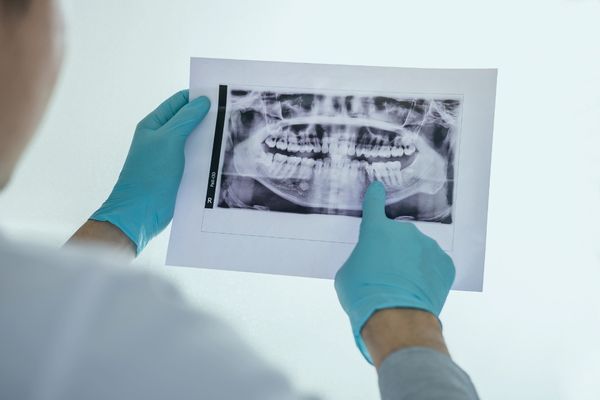
How Digital Scans Influence the Final Restoration
Digital workflows have significantly improved the efficiency of restorative dentistry.
But the quality of the outcome still depends on the quality of the input.
What the Lab Actually Receives
From the lab side, a digital scan is not simply a model.
It is the foundation for every design decision that follows.
Margins, contacts, occlusion and contours are all derived from the scan data provided.
Where Issues Occur
Most scans are usable.
But small inconsistencies can introduce challenges:
Margins that are not fully captured
Soft tissue interference
Incomplete data around preparation edges
Noise or distortion in the scan
These issues are not always obvious chairside.
But they affect how confidently the case can be designed.
The Role of Interpretation
When scan data is incomplete, the lab must reconstruct what is missing.
This is based on experience and pattern recognition.
But like all interpretation, it introduces variability.
How This Shows Up in the Final Result
When scan clarity is reduced, outcomes may include:
Slight discrepancies in fit
Additional adjustment at the margin
Contact refinement
Increased chairside time
Again, these are rarely major issues.
But they shift work downstream.
What Improves Scan Outcomes
Small improvements in scanning technique can significantly improve predictability:
Clear visibility of margins
Managing soft tissue effectively
Ensuring full data capture before submission
Reviewing scans before sending
These steps reduce the need for interpretation.
Digital Does Not Remove Variability
Digital workflows improve consistency.
But they do not eliminate variability.
They simply move it to different points in the process.
Predictability Starts at Capture
From the bench, the difference is clear.
High-quality scans lead to predictable outcomes.
Incomplete scans lead to cautious design.
And cautious design always carries more variables.
