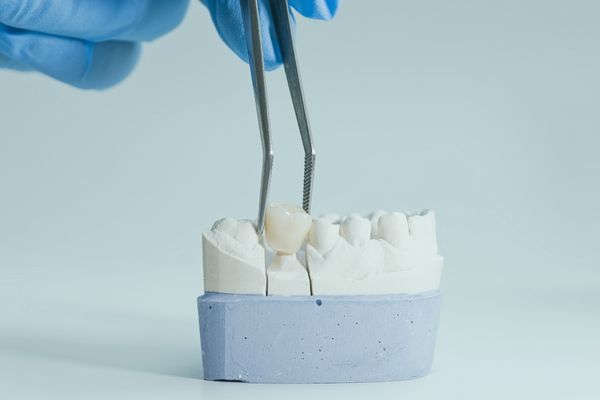
How Tooth Reduction Impacts the Final Restoration
Tooth reduction is one of the most influential factors in how a restoration performs.
Not just structurally but functionally and aesthetically.
Where Issues Begin
From the lab perspective, reduction is rarely completely absent.
More often, it is uneven.
Adequate in one area.
Slightly minimal in another.
Acceptable overall; but not ideal for the material or design.
These small inconsistencies don’t always prevent fabrication.
But they do shape what is possible.
The Constraint It Creates
Every material has a minimum thickness requirement.
When reduction falls below that threshold, the lab has to make a decision:
Adjust the internal fit
Modify contours
Compromise on material thickness
Or shift the aesthetic outcome
None of these are ideal.
But they are sometimes necessary to make the restoration work within the space provided.
How This Shows Up Chair-side
When reduction is limited or inconsistent, the result often presents as:
Heavier occlusion requiring adjustment
Over-contoured areas
Contact discrepancies
Aesthetic compromises, particularly in translucency
Again, these are rarely major issues in isolation.
But they add time and complexity to what should be a straightforward appointment.
Even Reduction vs Sufficient Reduction
It’s not only about reducing enough.
It’s about reducing consistently.
Uniform space allows the restoration to be designed as intended. Without needing to compensate for variation.
That consistency supports:
Accurate occlusion
Natural contours
Material strength
Predictable fit
Supporting the Intended Outcome
When reduction aligns with material requirements and design intent, the lab can fabricate without compromise.
There is no need to interpret or adjust internally.
The restoration becomes a direct execution of the case, not a negotiation with available space.
Predictability Starts with Preparation
From the bench, this pattern is clear.
Cases with sufficient and even reduction fabricate predictably.
Cases without it require adjustment; either at the lab stage or chair-side.
Neither is a failure.
But one is significantly more efficient.
Predictability Over Perfection
Perfect reduction isn’t the goal.
Predictable reduction is.
When the preparation supports the restoration from the outset, everything downstream becomes simpler; for the clinician, the lab and the patient.
For more on how communication impacts outcomes, see our insights on case communication. https://insights.spectrumdental.com.au/post/case-communication-dental-lab
